
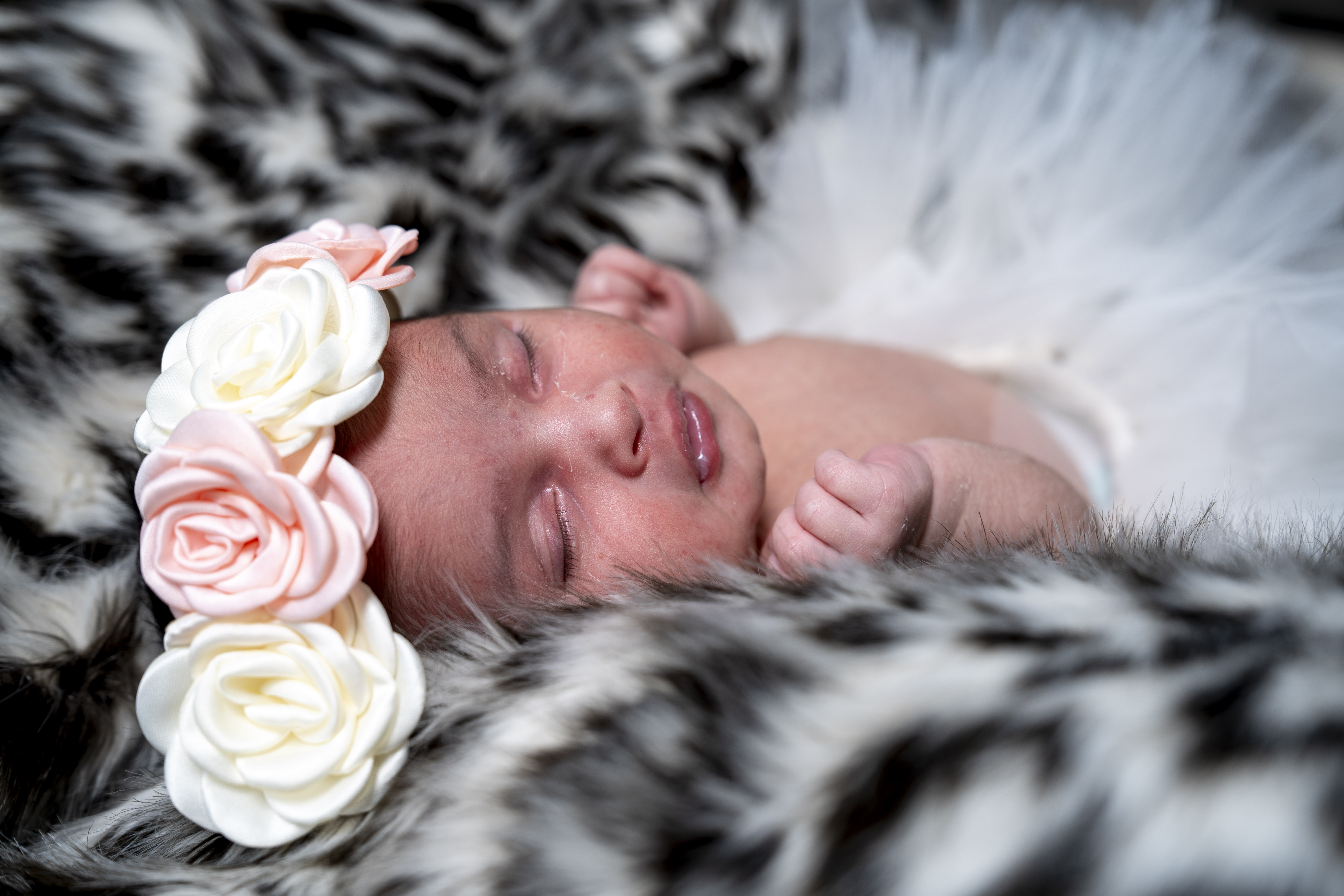
Most parents booking a newborn session have never had one before. There's no shame in that — it's a service most people use exactly once per child. This is what I wish every new parent knew before stepping into the studio (or having me step into their home), so the day actually feels calm rather than stressful.
Timing: book early, schedule late.
The sweet spot for newborn photography is days 5 through 14 after birth. Babies sleep deeply during this window and curl naturally into the poses people associate with newborn galleries. After day 14, sessions get noticeably harder — babies are more aware, less cooperative with sleep, and the iconic curled-up shots become difficult.
The right move: book the session during your second or third trimester, with a placeholder date roughly 5–7 days past your due date. We confirm the actual day after baby arrives. If anything shifts — early arrival, complications, NICU stay — the date moves. That flexibility is built in.
Studio or in-home: pick the one that fits your life.
Both formats are great. They produce different galleries.
Studio sessions happen at the Jupiter Farms studio. Controlled lighting, a calm environment, classic posed setups — wraps, baskets, soft backdrops. Studio is the right choice if you want timeless, deliberately styled portraits and you don't mind the drive.
In-home sessions document baby in the world they're going to grow up in. The nursery, the windows you nurse by, the hands that hold them. Lifestyle work rather than posed work. In-home is the right choice if you want pictures that feel like memory rather than studio portraits.
Some families do both — studio for the posed gallery, then a follow-up in-home a few weeks later for lifestyle. There's no wrong answer.
What baby should wear.
For studio sessions: nothing. Wraps, hats, and simple props are part of what we provide. Skin and texture is the point of newborn photography, and clothing usually works against that.
For in-home sessions: simple, neutral basics. White or cream onesies, soft solid swaddles, no large logos or busy patterns. The baby is the subject — the wardrobe disappears into the background by design.
What parents should wear.
If you want to be in pictures (and most parents do, even if they're hesitant), wear soft solid colors in the same family — cream, dusty pink, soft grey, navy. Avoid neon, large patterns, and crisp logos. The goal is for the family to read as a unit, with baby visually leading.
How long the session takes.
Studio sessions are scheduled at 1.5 hours but the camera time is much less. The bulk of the session is feeding, soothing, settling, and waiting for baby to fall back asleep between setups. We will absolutely take a 30-minute break mid-session if baby needs to feed. The total time is built around the baby, not around me.
In-home sessions are scheduled at 2 hours for the same reason — more setup variety means more time spent moving between rooms.
Delivery.
Galleries arrive within a week. Studio sessions deliver a minimum of 30 edited images; in-home delivers at least 40. Every image is edited by hand — color graded, exposure and tone dialed in, no plastic AI smoothing — and deeper Photoshop retouching is available per image when a shot calls for it. The full keeper set is yours; there's no tight curated count to choose from.
One last thing.
The first two weeks with a newborn are exhausting. The most common feedback I get from parents after a session is some version of "I was so nervous and it ended up being the calmest part of our week." That's the goal. We move slowly, we work around the baby, and we leave with a gallery that holds up year after year.